
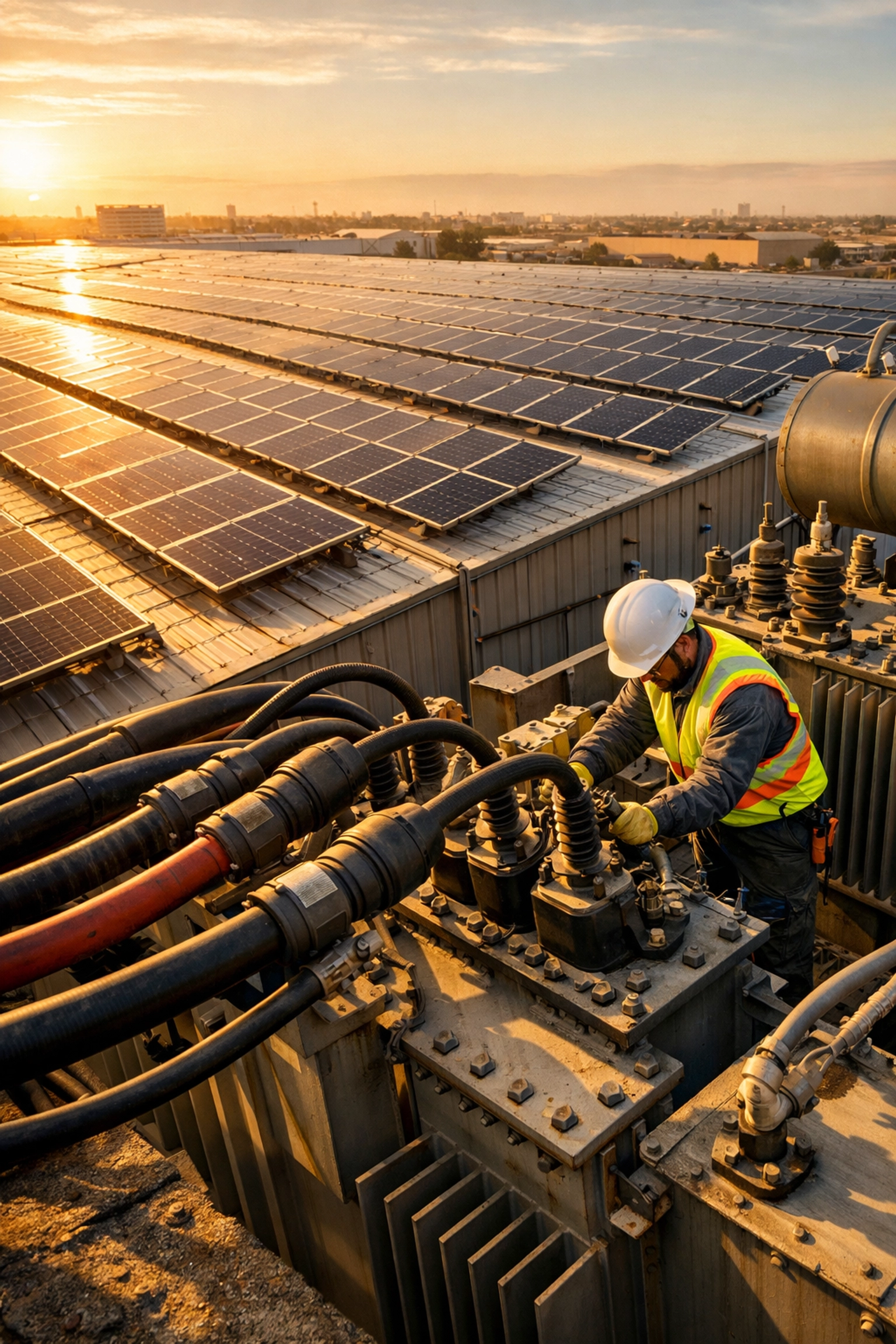
If you're planning a commercial solar installation in 2026, here's something you need to know: the panels aren't the problem anymore. The technology is brilliant, the prices are competitive, and the return on investment has never been clearer. The real challenge? Getting connected to the grid.
We're seeing commercial solar projects face grid connection delays of up to 12 months, sometimes longer for larger installations. That's not a future prediction. That's happening right now, and it's catching business owners completely off guard.
The Grid Connection Bottleneck Nobody Talks About
Here's what most solar companies won't tell you upfront: getting your system installed on your roof is the easy part. The hard part is navigating the maze of DNO (Distribution Network Operator) applications, impact assessments, infrastructure upgrades, and approval processes that stand between your completed installation and actually generating power.
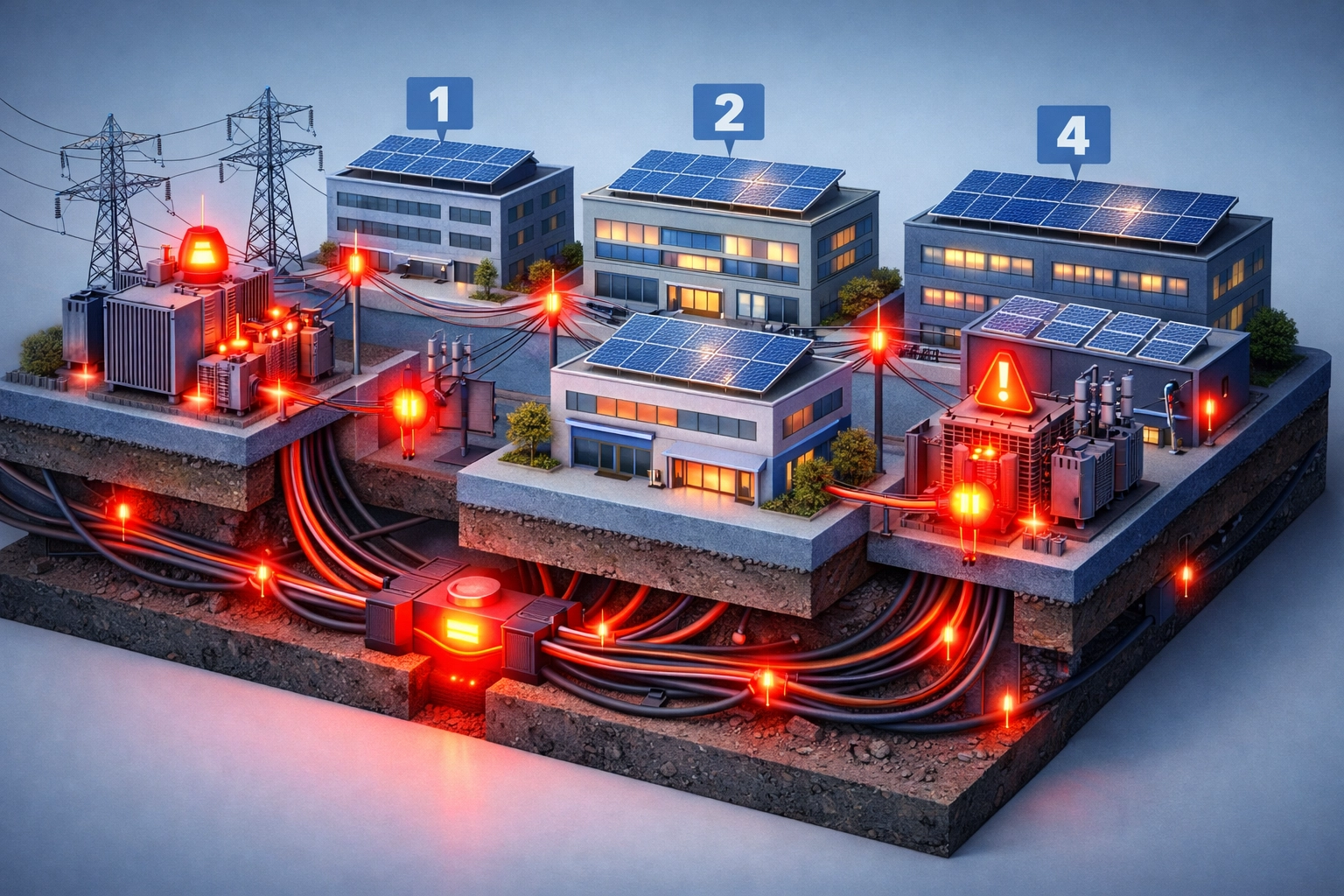
The grid wasn't built for the surge in renewable energy we're seeing in 2026. Every business that wants to go solar needs to connect to the same infrastructure, and the system is struggling to keep pace. Add in the complexity of AI-driven electricity demand, data center expansion, and nationwide electrification efforts, and you've got a perfect storm of delays.
For commercial installations, especially systems over 50kWp, the approval process involves multiple stakeholders, technical studies, and sometimes even infrastructure upgrades that you'll need to fund. One delayed approval in the chain can push your entire project back months.
Why Waiting Is the Worst Thing You Can Do
Some business owners are putting off their solar plans, thinking they'll wait until "things calm down." We understand the logic, but here's the reality: things aren't calming down. They're getting more complicated.
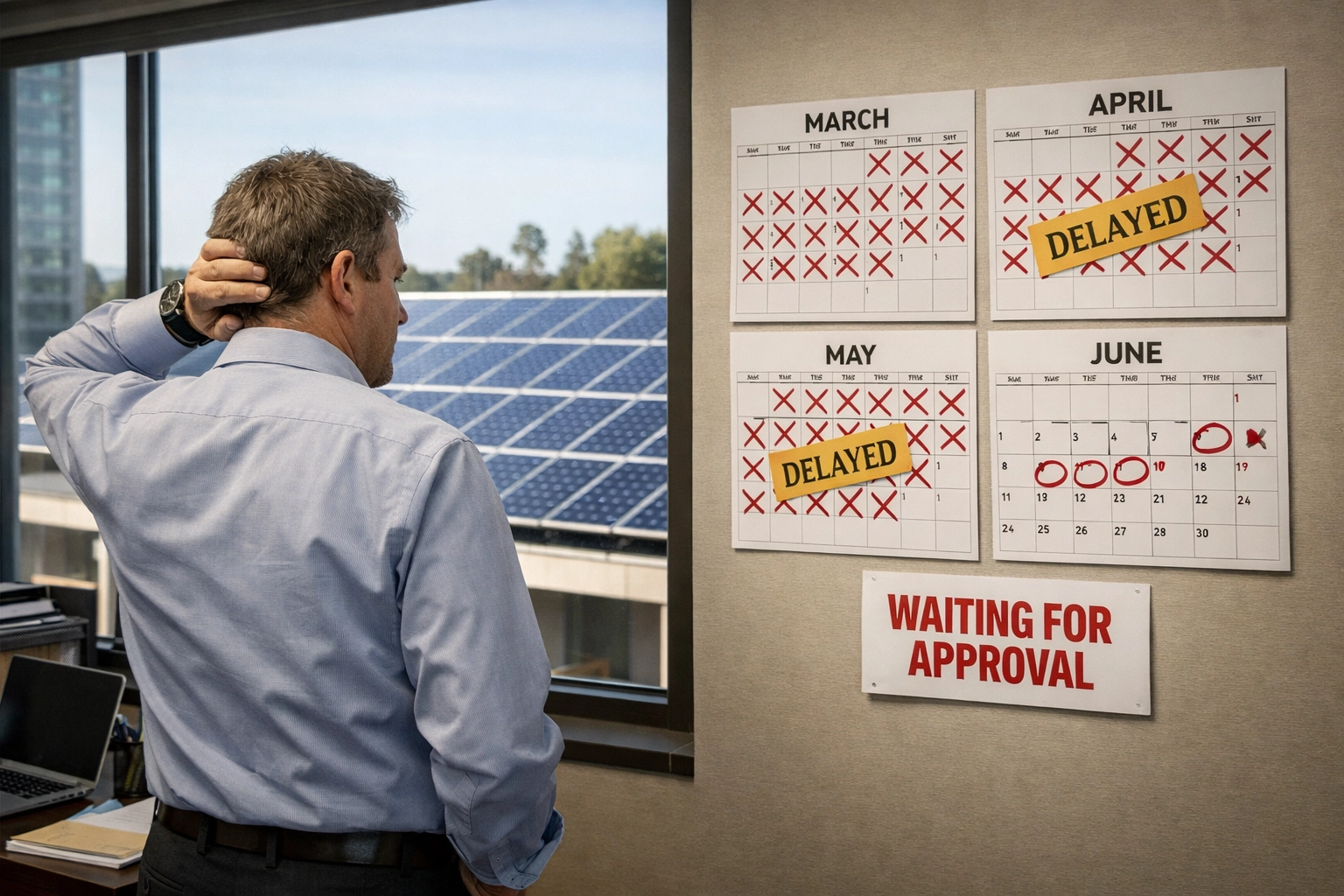
Every month you wait, you're joining a longer queue. The DNOs are already backlogged, and with more businesses recognizing the financial benefits of commercial solar, that queue is growing. Starting your application today means you'll be months ahead of anyone who waits until next quarter, or next year.
There's also the financial element. Energy prices aren't dropping significantly, and the savings from generating your own power compound over time. A 12-month delay doesn't just mean waiting an extra year for your system, it means losing 12 months of savings you could have been banking. For a typical commercial installation, that's thousands of pounds left on the table.
And if you're factoring in any available grants or incentive schemes, many of these have application deadlines or first-come-first-served allocations. Waiting means potentially missing out on funding that could significantly improve your project economics.
What Makes Grid Connection So Complicated?
The process isn't straightforward, and that's exactly why so many projects stall. Here's what actually needs to happen:
Initial DNO Application: Your installer submits a G99 application (for systems over 3.68kW) to your local Distribution Network Operator. This includes detailed technical specifications, site plans, and equipment schedules.
Impact Assessment: The DNO assesses whether your proposed system will impact the local network. For larger commercial systems, this often reveals capacity constraints that require mitigation measures.
Potential Infrastructure Upgrades: In many cases, particularly for systems over 100kWp, you'll need network reinforcement. This might mean transformer upgrades, cable replacements, or protection equipment installations, and yes, you typically contribute to these costs.
Multiple Stakeholder Coordination: Depending on your location and system size, you might need sign-offs from multiple parties, including local planning authorities, environmental agencies, and even the Ministry of Defence if you're near certain radar installations.
Technical Witness Testing: Once everything is approved and installed, the DNO needs to witness commissioning tests before you can export power to the grid.
Each of these stages has its own timeline, and delays at any point cascade through the entire process. One missing document, one delayed site visit, one infrastructure bottleneck, and your 6-month timeline becomes 12 months.
How We Handle the Hard Work (So You Don't Have To)
At Live Solar, we've made grid connection management a core part of our commercial solar service. Not as an add-on or an afterthought: as a fundamental part of delivering a working system that actually generates power when we say it will.
When you work with us, we take ownership of the entire connection process from day one. That means we're submitting applications before your system is even installed, chasing DNO responses, managing stakeholder communications, and navigating any complications that arise. You shouldn't need to become an expert in G99 applications or DNO protocols: that's our job.
We maintain direct relationships with DNOs across the East Midlands, which means when we submit an application, it comes from a known, trusted installer with a track record of technically sound submissions. That matters. DNOs prioritize applications from installers who consistently provide complete, accurate documentation, and we've built that reputation through hundreds of successful connections.
What Sets Our Approach Apart
Early Engagement: We start the grid connection process early in your project timeline, often before you've even signed the contract. This gives us maximum flexibility to address any issues that arise without delaying your installation date.
Realistic Timelines: We don't promise you'll be generating power in 8 weeks when we know the grid connection alone takes 4 months. Our project timelines account for the real-world approval processes, and we keep you updated every step of the way.
Proactive Problem-Solving: When the DNO comes back with capacity concerns or requests for additional information, we don't just forward you the email. We analyze the issue, propose solutions, and handle the technical back-and-forth directly.
Infrastructure Planning: For larger installations where network upgrades are likely, we identify these requirements during the design phase and factor them into your project budget and timeline. No surprises six months into the process.
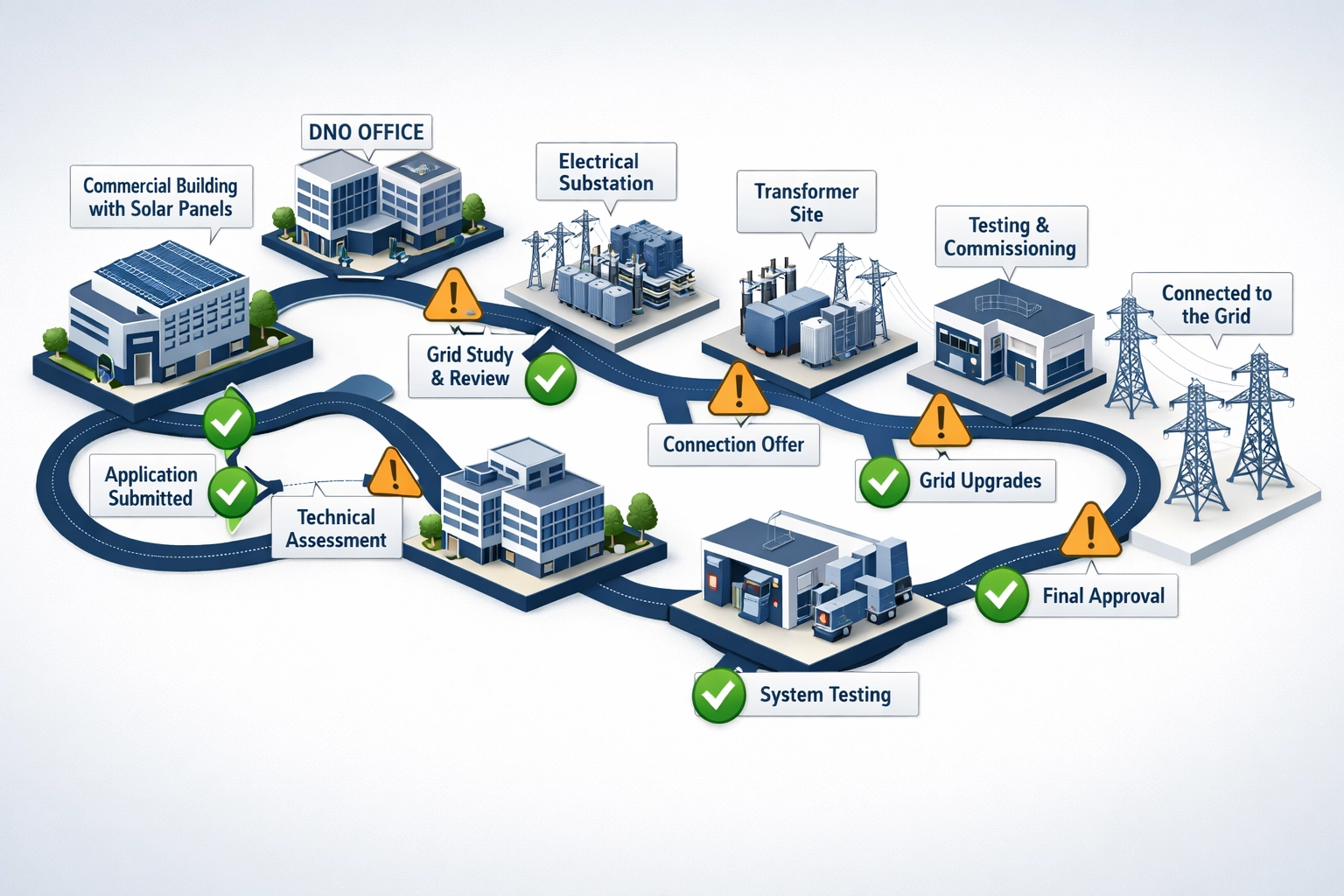
Our commercial solar installations include full project management of the grid connection process because we know it's the difference between a solar system that's installed and a solar system that's actually working.
The Commercial Solar Projects That Move Fastest
Through hundreds of installations, we've identified the commercial solar projects that move through grid connection fastest:
Systems with on-site consumption focus: If your business uses most of the power you generate during daylight hours, the grid connection process is often simpler because you're minimizing export requirements.
Projects in areas with network capacity: Some locations have more available grid capacity than others. Part of our initial assessment involves checking network constraints before you commit to the project.
Installations paired with battery storage: Adding battery storage to your commercial system can actually simplify grid connection in some cases, as it reduces peak export to the grid and provides additional network services.
Projects that start early: This is the big one. The businesses seeing their systems commissioned in 2026 are the ones that started their applications in 2025. Early action gives you buffer time for any delays and ensures you're not competing with an even bigger backlog later in the year.
Don't Wait: Let's Get Your Application Moving
Here's the bottom line: if you're serious about commercial solar in 2026, the time to start is now. Not next quarter when you've finalized your budget. Not next year when you've completed your other capital projects. Now.
The grid connection timeline is what it is. We can't make the DNOs move faster (though we certainly try), but we can make sure your project moves through the process as efficiently as possible. Every week you delay starting is a week added to the back end of your timeline.
We handle the complexity. You get the results.
If you're ready to move forward with commercial solar, get in touch with us today. We'll assess your site, provide realistic timelines including grid connection, and get your DNO application moving while you focus on running your business.
The best time to start your grid connection application was six months ago. The second-best time is today.