
Let's talk about something that keeps most business owners awake at night: energy bills that just won't quit climbing. If you're running a large facility, a warehouse, manufacturing plant, or commercial building, you've probably watched your monthly energy costs balloon over the past few years. The good news? A properly designed 250kWp+ commercial solar system can slash those costs by up to 70%, and we're going to show you exactly how to make it happen.
At Live Solar, we've helped businesses across the UK take control of their energy future. As a British veteran-owned company with full MCS accreditation, we've seen firsthand how large-scale solar installations transform not just balance sheets, but entire business operations. This isn't about slapping a few panels on your roof and hoping for the best, it's about implementing a proven framework that delivers real, measurable results.
Why 250kWp+ Systems Are Different
Here's the thing about large commercial solar: the rules change completely once you cross the 250kWp threshold. You're not just scaling up a residential system; you're entering territory where economies of scale, advanced monitoring, and strategic energy management come together to create something genuinely powerful.
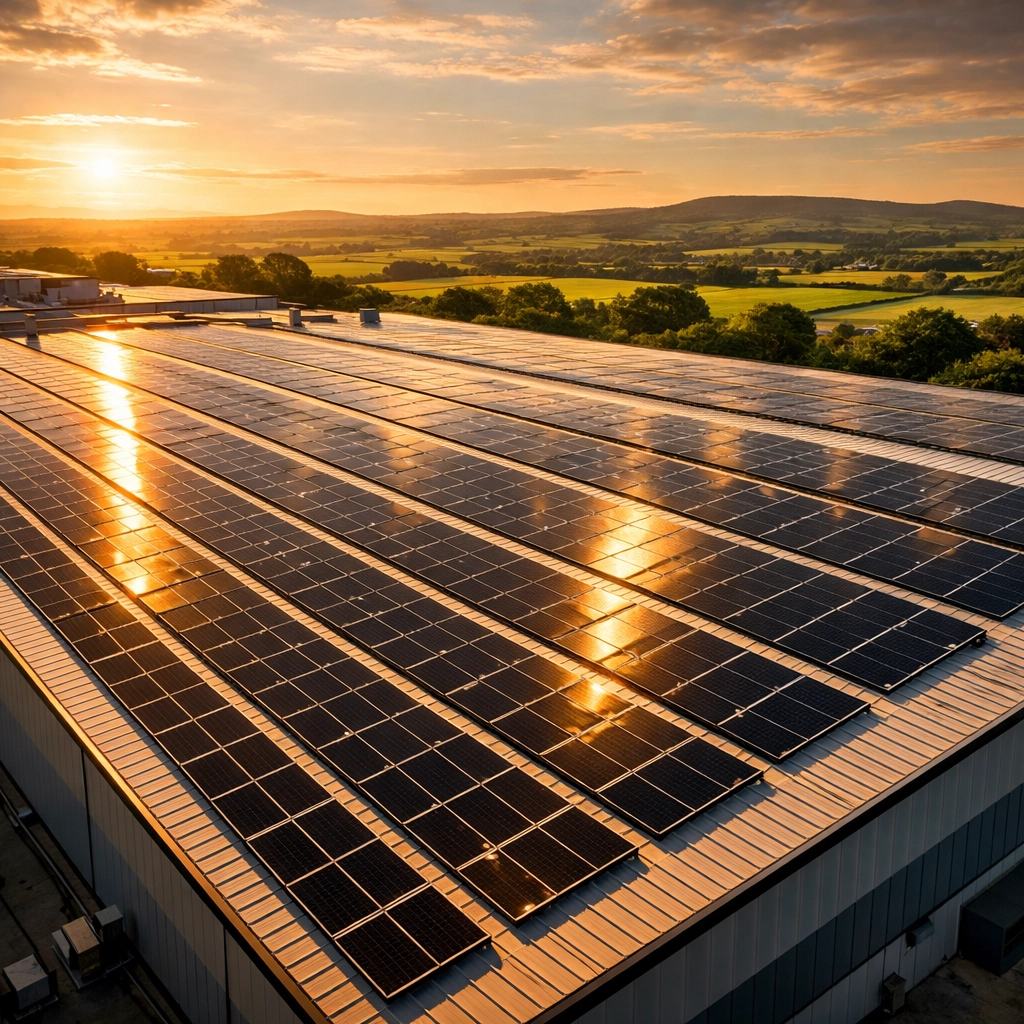
A 250kWp system typically requires around 500 solar panels and can generate approximately 225,000 kWh annually in the UK. That's enough electricity to power several small businesses or one large operation, depending on your consumption patterns. But the real magic happens when you pair this generation capacity with intelligent energy management and our cutting-edge real-time monitoring technology.
The True Cost: Investment vs. Value
Let's cut through the noise and talk numbers. A 250kWp commercial solar installation, including VAT and professional installation, will run approximately £200,000. Yes, that's a substantial investment. But here's where it gets interesting.
Based on current UK electricity rates and typical commercial consumption patterns, you're looking at annual savings of £60,000 to £70,000. That puts your payback period somewhere between 3 to 4 years. After that? Pure profit, year after year, for the 25+ year lifespan of your system.
If you need even more capacity:
- 500kWp system: Around £400,000 (potentially £120,000-£140,000 annual savings)
- 1,000kWp system: Approximately £750,000 (£240,000+ annual savings possible)
The larger your system, the better your per-kWp economics become. That's the beauty of commercial-scale solar, the investment scales more efficiently than the costs.
The Framework: Five Steps to Energy Independence
Step 1: Energy Audit and Consumption Analysis
Before a single panel goes up, we need to understand your energy fingerprint. When does your business use the most power? Where are the inefficiencies? What's your current cost per kWh? This baseline assessment is critical because it determines your system's optimal size and configuration.
We analyse your half-hourly consumption data (if available) or conduct detailed monitoring over several weeks. This tells us exactly how much solar capacity you need and how to maximize self-consumption, the key metric that determines your actual savings.
Step 2: Site Assessment and System Design
Not all roofs are created equal. We evaluate structural capacity, orientation, shading, and available space. For 250kWp+ systems, you'll need approximately 1,250-1,500 square meters of suitable roof space, though this varies based on panel efficiency.
Our design process considers everything from mounting systems that protect your roof warranty to cable routing that minimizes voltage drop. We also incorporate expansion capacity because many businesses find themselves wanting to add more panels once they see the results.
Step 3: Planning and Regulatory Compliance
Here's some good news: systems exceeding 50kW in England and Wales typically require Prior Approval rather than full planning permission. This is a far less stringent process, though you still need to tick all the right boxes.
You'll also need:
- Building regulations compliance
- DNO (Distribution Network Operator) approval for grid connection
- MCS certification (which we handle as an accredited installer)
- Structural engineering certificates for roof-mounted systems
We manage this entire process, liaising with local authorities and the DNO on your behalf. It's one of the advantages of working with an experienced commercial installer rather than trying to navigate this maze yourself.
Step 4: Installation and Commissioning
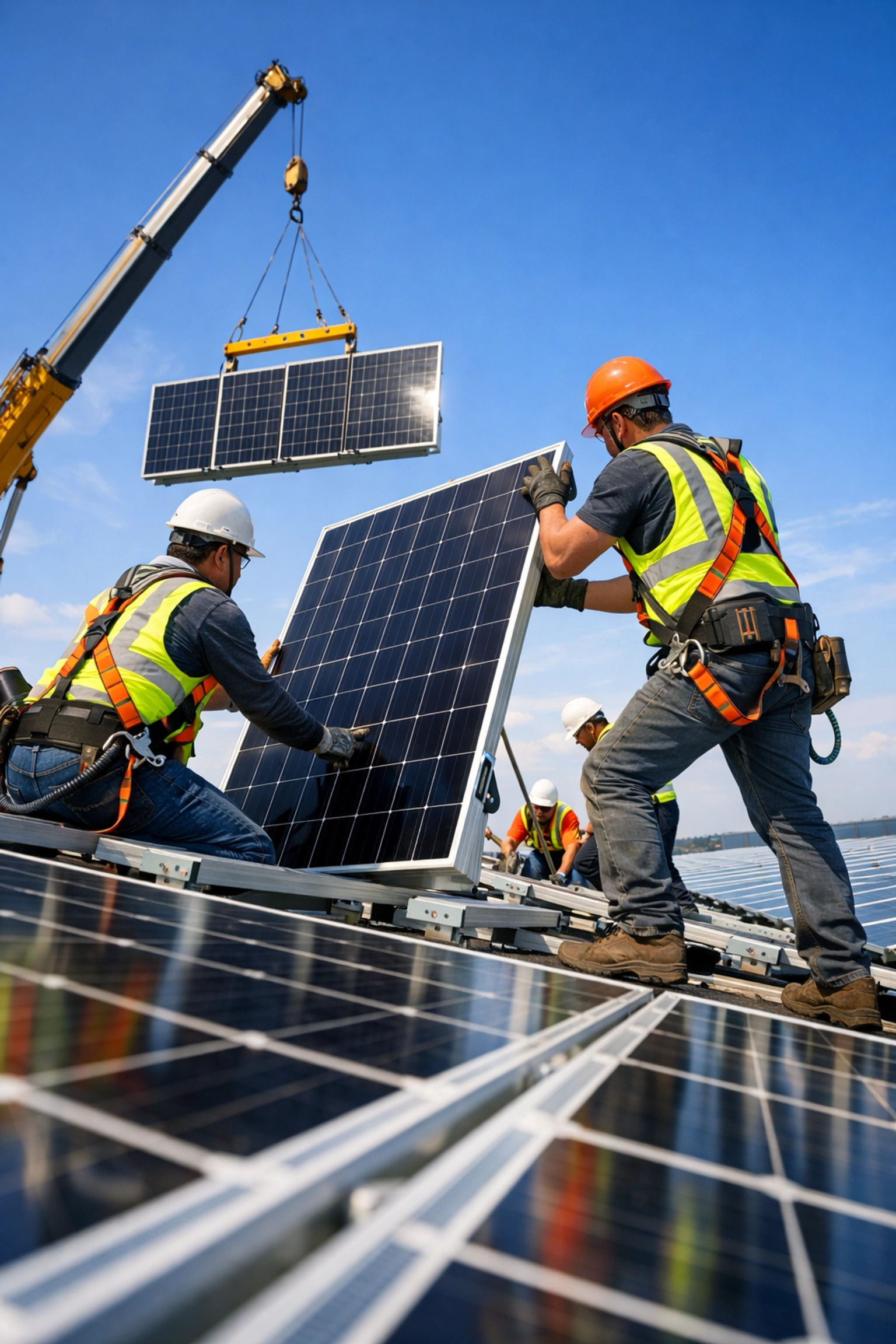
A 250kWp installation typically takes 2-4 weeks, depending on site complexity. We work efficiently to minimize disruption to your operations, often completing rooftop work outside your core business hours.
Our installation includes:
- High-efficiency commercial-grade panels (typically 500W+ per panel)
- Commercial inverters with advanced monitoring capabilities
- Our proprietary real-time monitoring system
- Full electrical integration with your existing infrastructure
- Complete testing and commissioning
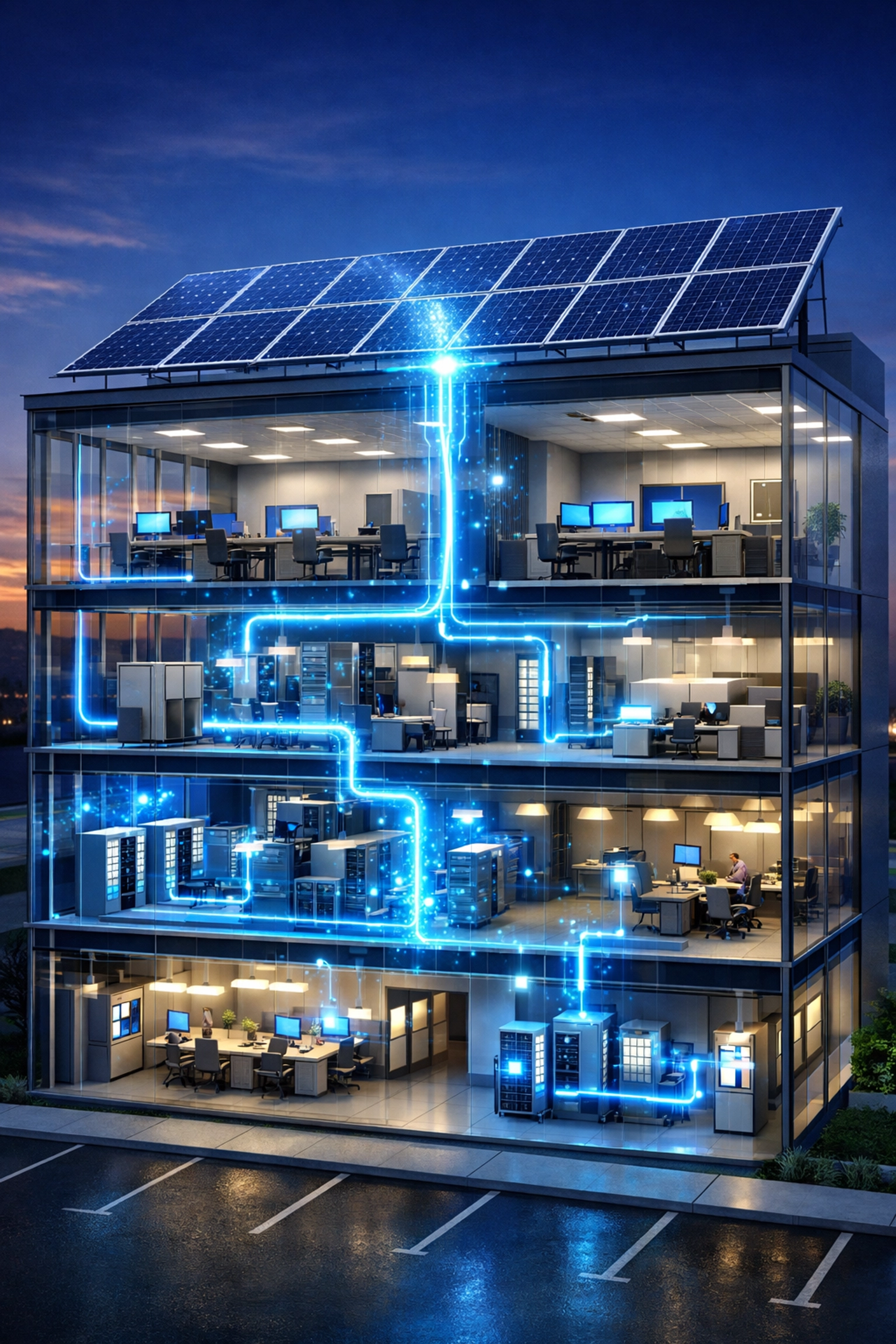
Once we flip the switch, you're not just generating power, you're generating data. Our monitoring system tracks every kilowatt-hour produced and consumed, giving you unprecedented visibility into your energy usage.
Step 5: Optimization and Ongoing Management
This is where many installers disappear, but we're just getting started. Your solar system's performance isn't set-and-forget; it's an ongoing optimization opportunity.
Our real-time monitoring alerts you to any performance issues immediately. Panel soiling? We'll know before you do. Inverter inefficiency? Flagged automatically. This proactive approach maximizes your system's lifetime generation and return on investment.
The ROI Reality Check
Let's talk about that 70% reduction claim honestly. Can you really cut your energy costs by 70%? Yes, but it depends on three critical factors:
Your self-consumption rate: If your business operates primarily during daylight hours (when solar generates), you'll use more of your generated electricity directly. This is the most valuable electricity because you're avoiding both the cost of grid electricity and standing charges. Businesses with high daytime consumption: manufacturing, offices, retail: typically see 60-80% self-consumption rates.
Your current electricity rate: The higher your current per-kWh cost, the more you save with each unit of solar-generated electricity. If you're paying premium rates for commercial electricity, your savings accelerate accordingly.
System efficiency and location: Modern commercial panels are incredibly efficient, but location still matters. A south-facing system in Cornwall will outperform a north-facing system in Scotland. We design around these realities to maximize your specific installation's output.
Commercial solar systems typically achieve 16% to 45% ROI, depending on these factors. Larger systems benefit from economies of scale and often reach the higher end of this range.
Why Live Solar for Your Commercial Installation
We've installed commercial systems across the UK, including notable projects like our 250kWp installation at Peak Converters: an investment of over £200,000 that's now delivering substantial energy cost reductions. What sets us apart isn't just our technical expertise; it's our commitment to long-term partnership.
As a British veteran-owned business, we bring military precision to project management. Our MCS accreditation ensures every installation meets the highest industry standards. But it's our cutting-edge monitoring technology that really changes the game: you get real-time visibility into your system's performance, not monthly reports that arrive too late to act on.
We're not here to sell you the biggest system possible. We're here to design the right system for your specific needs, install it properly, and support it throughout its lifetime.
The Environmental Impact
Beyond the financial benefits, a 250kWp system offsets approximately 80-90 tonnes of CO2 annually. Over 25 years, that's equivalent to planting over 40,000 trees. For businesses committed to sustainability and net-zero targets, commercial solar isn't just an economic decision: it's an environmental imperative.
Take the Next Step
If you're serious about cutting your energy costs and taking control of your business's energy future, start with a conversation. We'll analyse your specific situation, run the numbers, and show you exactly what's possible.
The businesses that installed commercial solar three years ago are now reaping massive rewards. The ones that wait another three years will wish they'd started today. The framework is proven. The technology is mature. The savings are real.
Let's talk about what commercial solar can do for your business.