
If you're running a business in the UK, you've probably noticed that energy bills have become one of those line items that makes you wince every month. The good news? There's a proven way to take back control of your energy costs while doing your bit for the planet. We're talking about commercial solar panels: and they're more accessible than ever in 2026.
At Live Solar, we've helped businesses across the UK make the switch to solar, and we've seen first-hand how transformative it can be. Whether you're running a warehouse in Derby, a retail unit in Sheffield, or an office block in Nottingham, this guide will walk you through everything you need to know about commercial solar panels in the UK.
What Are Commercial Solar Panels and How Do They Work?
Let's start with the basics. Commercial solar panels work exactly like residential ones: just on a bigger scale. They capture sunlight and convert it into electricity that powers your business operations. Simple as that.
Here's a quick breakdown of the key components in a commercial solar system:
- Solar panels – These are the stars of the show. Mounted on your roof or ground, they capture sunlight and convert it into direct current (DC) electricity.
- Solar inverter – This clever bit of kit converts that DC electricity into alternating current (AC), which is what your business actually uses.
- Charge controller – If you've got battery storage, this regulates voltage and current to keep everything running smoothly.
- Battery bank – Stores excess energy for use when the sun isn't shining (more on this later).
- Utility metre – Measures how much electricity you're generating and lets you sell any surplus back to the grid.
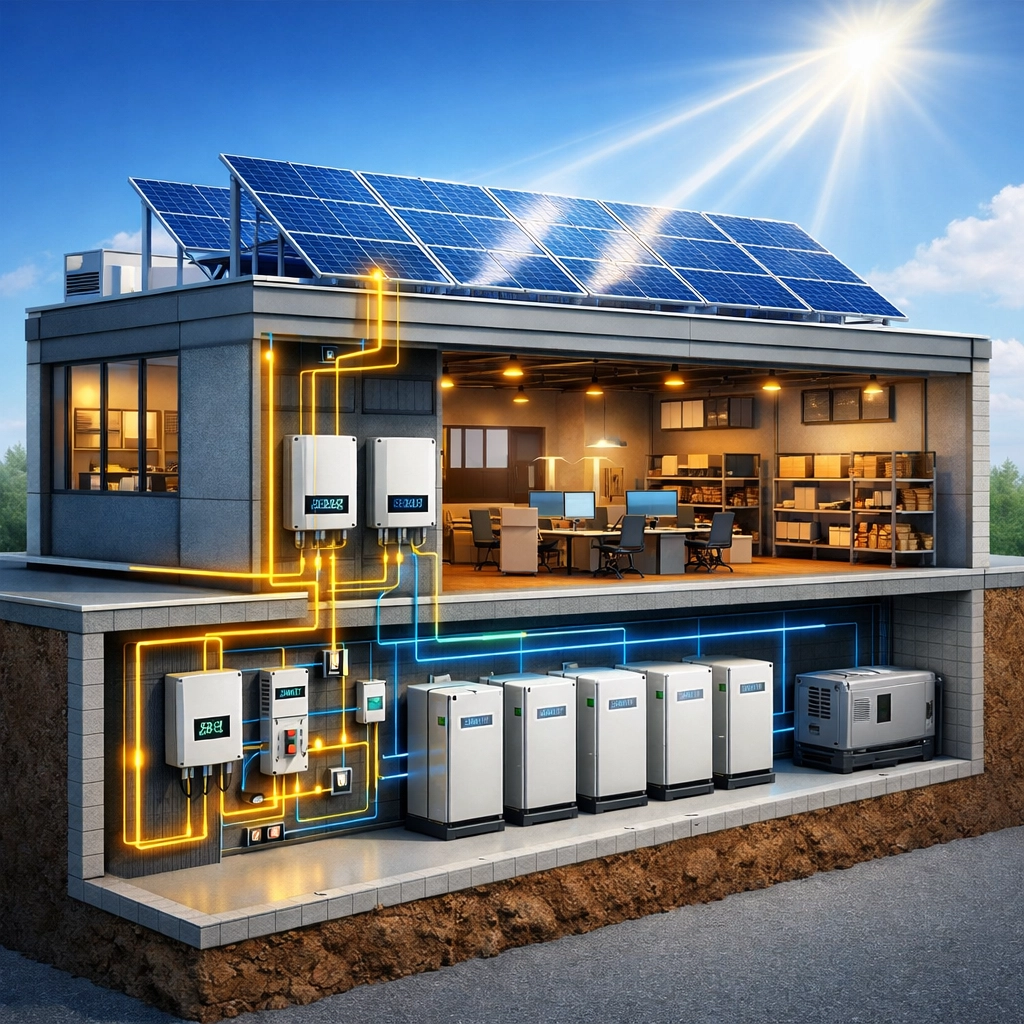
The beauty of commercial solar is that it works alongside the grid. When the sun's out and your panels are generating more than you need, you can export the excess. When it's cloudy or you're running heavy machinery, you can draw from the grid as normal. It's a win-win setup that gives you flexibility and savings.
Why UK Businesses Are Making the Switch
We won't sugarcoat it: commercial solar panels are an investment. But the returns speak for themselves. For small to medium-sized systems (20kW-50kW), UK businesses are seeing annual savings ranging from £4,595 to £11,895. That's money going straight back into your business instead of disappearing into energy bills.
But it's not just about the money. Here's what else commercial solar brings to the table:
Protection Against Price Volatility
Energy prices have been on a rollercoaster ride over the past few years. By generating your own electricity, you're insulating your business from those unpredictable spikes. Your solar panels produce power at a fixed cost: sunlight doesn't come with a price tag.
Enhanced Corporate Responsibility
Sustainability isn't just a buzzword anymore: it's what customers, partners, and employees expect. Installing commercial solar panels demonstrates real commitment to reducing your carbon footprint and supports net zero targets. It's tangible action that people can see.
Reduced Grid Dependence
The less you rely on grid-imported electricity, the more resilient your business becomes. Pair your panels with battery storage, and you've got backup power during outages too.
Long-Term Asset Value
Solar panels typically last 25-30 years with minimal maintenance. That's decades of reduced energy costs and a genuine asset that adds value to your property.
The Commercial Solar Installation Process
One of the most common questions we get asked is: "What's actually involved in getting solar panels installed?" Fair enough: it's a significant project and you want to know what you're signing up for.
Here's how we approach commercial installations at Live Solar:
1. Feasibility Study
First things first, we need to assess whether your site is suitable. Our surveyors will evaluate your roof space (or ground area), orientation, potential shading issues, and structural integrity. We'll calculate the optimal system size and give you realistic projections for energy generation.
2. System Design
Once we know what we're working with, our engineers create a bespoke design tailored to your business. This includes panel positioning, wiring layouts, load-bearing considerations, and electrical connections. Every installation is different, so we never take a one-size-fits-all approach.
3. Regulatory Approvals
Depending on your location and building type, you may need planning permission. Listed buildings and properties in conservation areas have specific requirements: for example, panels shouldn't protrude more than 20cm from walls or roof slopes. We also handle the approval process with your local Distribution Network Operator (DNO) for grid-connected systems.
4. Installation
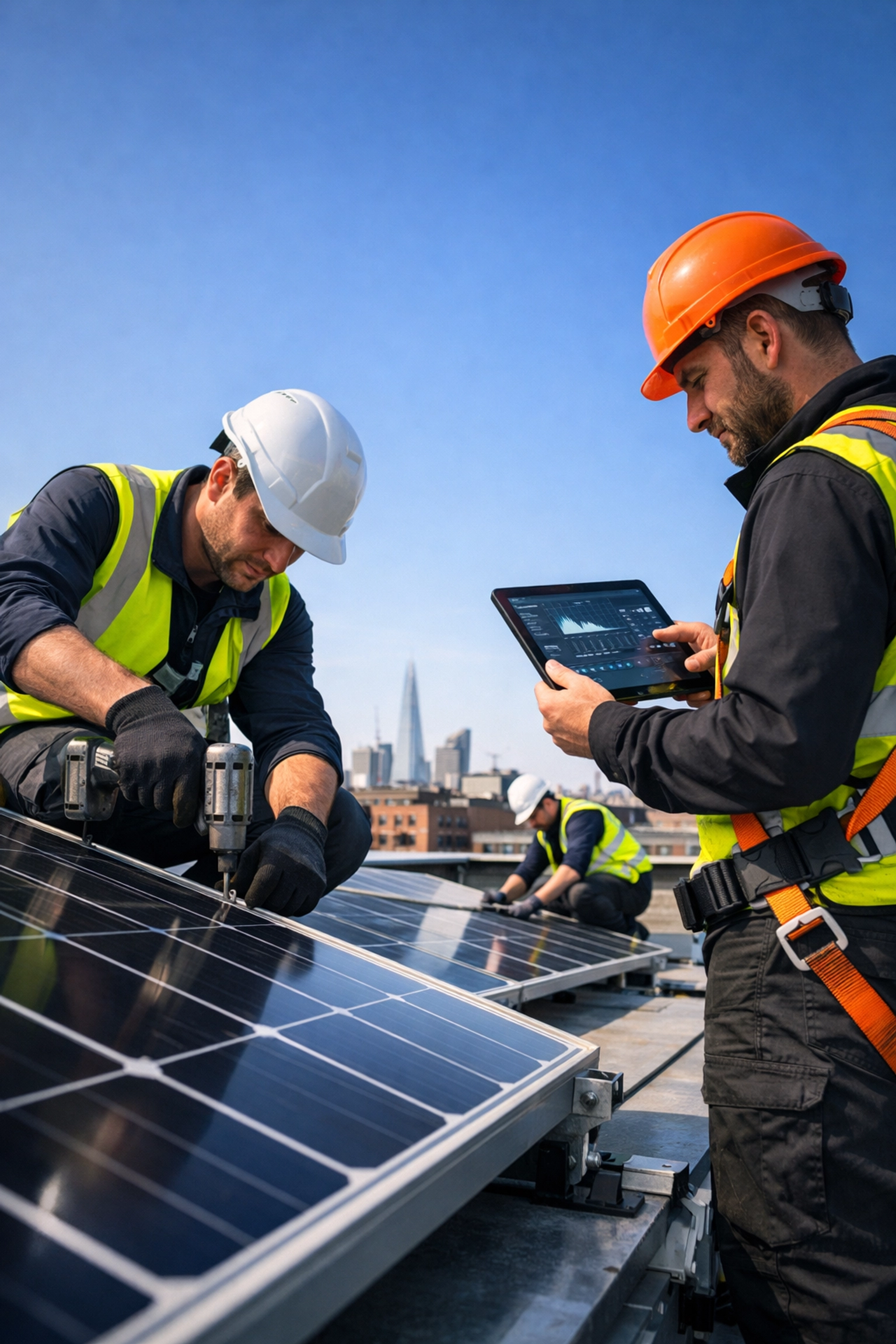
This is where things get exciting. We set up scaffolding, install mounting systems, position the panels, run the electrical wiring, connect the inverter, and integrate battery storage if you've opted for it. Our MCS-accredited team handles everything to the highest standards.
5. Testing and Handover
Before we leave, we run comprehensive tests to ensure your system is functioning correctly and safely. Then we hand it over to you, complete with our real-time monitoring technology so you can track performance from day one.
Financial Incentives You Should Know About
The upfront cost of commercial solar can feel daunting, but there are several schemes designed to help UK businesses make the switch:
Smart Export Guarantee (SEG) – This scheme pays you for any excess electricity you export back to the grid. It's not going to make you rich, but it's a nice bonus on top of your savings.
Annual Investment Allowance (AIA) – You can deduct the full cost of qualifying solar equipment from your profits before tax. This significantly reduces the effective cost of your installation.
VAT Relief – There have been VAT-free periods for solar installations, making it even more affordable to invest in renewable energy.
UK Shared Prosperity Fund Low Carbon Project – Depending on your location, you may be eligible for grants or funding support through this scheme.
We always recommend having a chat with your accountant about the tax benefits: they can be substantial.
Maintenance: What to Expect
Here's some great news: commercial solar panels are remarkably low-maintenance. The UK's regular rainfall does a decent job of keeping panels clean naturally. That said, you'll want to clear away any debris like leaves or bird droppings that could affect performance.
Annual inspections by qualified professionals are essential to ensure everything continues running efficiently. We're talking about checking connections, inverter performance, and overall system health. Think of it like an MOT for your solar system: a small investment to protect a much larger one.
Why Businesses Choose Live Solar
We're proud to be a British veteran-owned company with deep roots in our community. Every installation we complete is backed by our MCS accreditation, which means you can trust that the work meets the highest industry standards and qualifies for financial incentives.
What really sets us apart is our commitment to transparency and ongoing support. Our cutting-edge real-time monitoring technology lets you see exactly how your system is performing at any moment. No guesswork, no surprises: just clear data that helps you maximise your investment.
We've worked with businesses of all sizes across the UK, from small workshops to large industrial units. Whatever your situation, we'll design a solution that fits your needs and budget.

Ready to Take the Next Step?
Commercial solar panels aren't just about cutting costs: they're about future-proofing your business, demonstrating environmental leadership, and taking control of your energy destiny.
If you're curious about what solar could do for your business, we'd love to have a chat. Head over to our commercial solar page to learn more, or get in touch for a no-obligation consultation. We'll assess your site, crunch the numbers, and show you exactly what's possible.
The sun's been powering our planet for billions of years. Isn't it time your business got in on the action?